
The FY 2026 NDAA: What Research Organizations Need to Know
Preparing for a more demanding regulatory environment under the FY 2026 NDAA
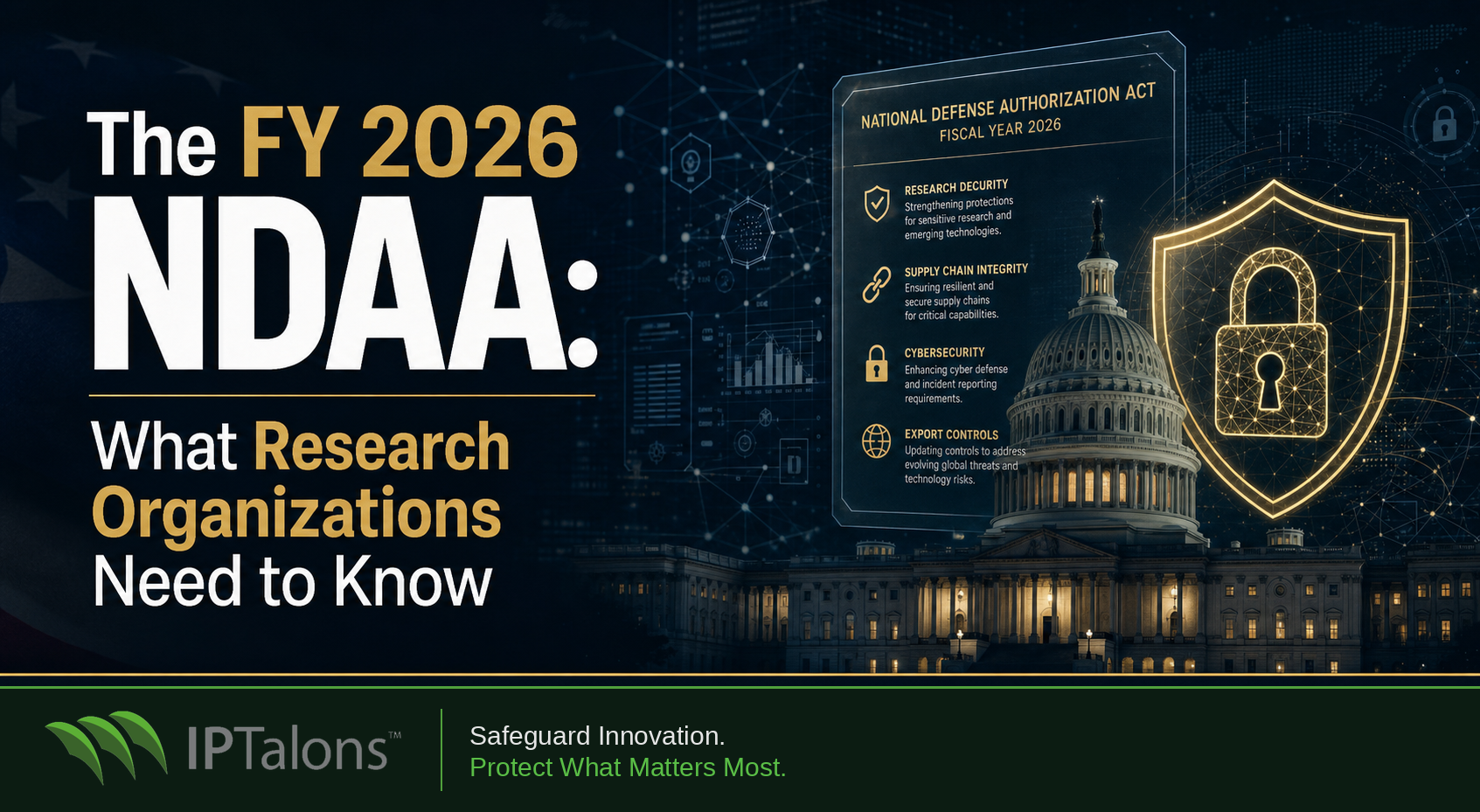
The Fiscal Year 2026 National Defense Authorization Act (NDAA) is poised to bring transformative changes to the research security landscape. As the U.S. government intensifies its focus on protecting sensitive technology and intellectual property from foreign exploitation, research organizations must prepare for a more demanding regulatory environment.
Expanded Disclosure Mandates
One of the most significant aspects of the FY 2026 NDAA is the expansion of disclosure mandates. Researchers will be required to provide even more detailed information about their foreign collaborations, including:
Foreign Collaborations
Any funding, honorary positions, or laboratory space provided by foreign entities must be fully disclosed and documented.
Internal Controls
Research institutions will be expected to establish comprehensive research security programs that include regular training, enhanced cybersecurity, and rigorous vetting of international partners.
Stricter Penalties
Organizations that fail to adhere to the new security standards could face consequences from suspension of federal funding to legal action.
Creating a Culture of Security Awareness
The FY 2026 NDAA emphasizes the importance of robust internal controls. Research institutions will be expected to establish comprehensive research security programs that include:
Regular training for staff, enhanced cybersecurity measures, and rigorous vetting of international partners. The goal is to create a culture of security awareness that can effectively identify and mitigate risks.
Heightened Enforcement
The FY 2026 NDAA also introduces stricter penalties for non-compliance. Organizations that fail to adhere to the new security standards could face a range of consequences, from the suspension of federal funding to legal action. This heightened enforcement reflects the government's commitment to safeguarding the integrity of American innovation.
Preparing Your Organization
To navigate this evolving landscape, research organizations should proactively review their current security policies and procedures. Implementing advanced due diligence tools and seeking expert guidance can help ensure compliance and protect vital research assets.
Review current security policies against new NDAA requirements
Implement advanced due diligence and vetting tools
Establish mandatory security awareness training programs
Document all foreign affiliations and funding sources transparently
By staying ahead of these regulatory changes, institutions can continue to thrive in a competitive and increasingly complex global environment.
Stay Ahead of NDAA Compliance
Don't wait for enforcement actions to reveal compliance gaps. Proactively prepare your organization with advanced due diligence tools and expert guidance.
References
[1] The FY 2026 NDAA: What Research Organizations Need to Know , https://www.iptalons.com/insights