
The Future of Research Security: AI-Enabled Due Diligence
How AI-powered tools are revolutionizing the way organizations vet researchers and protect innovation
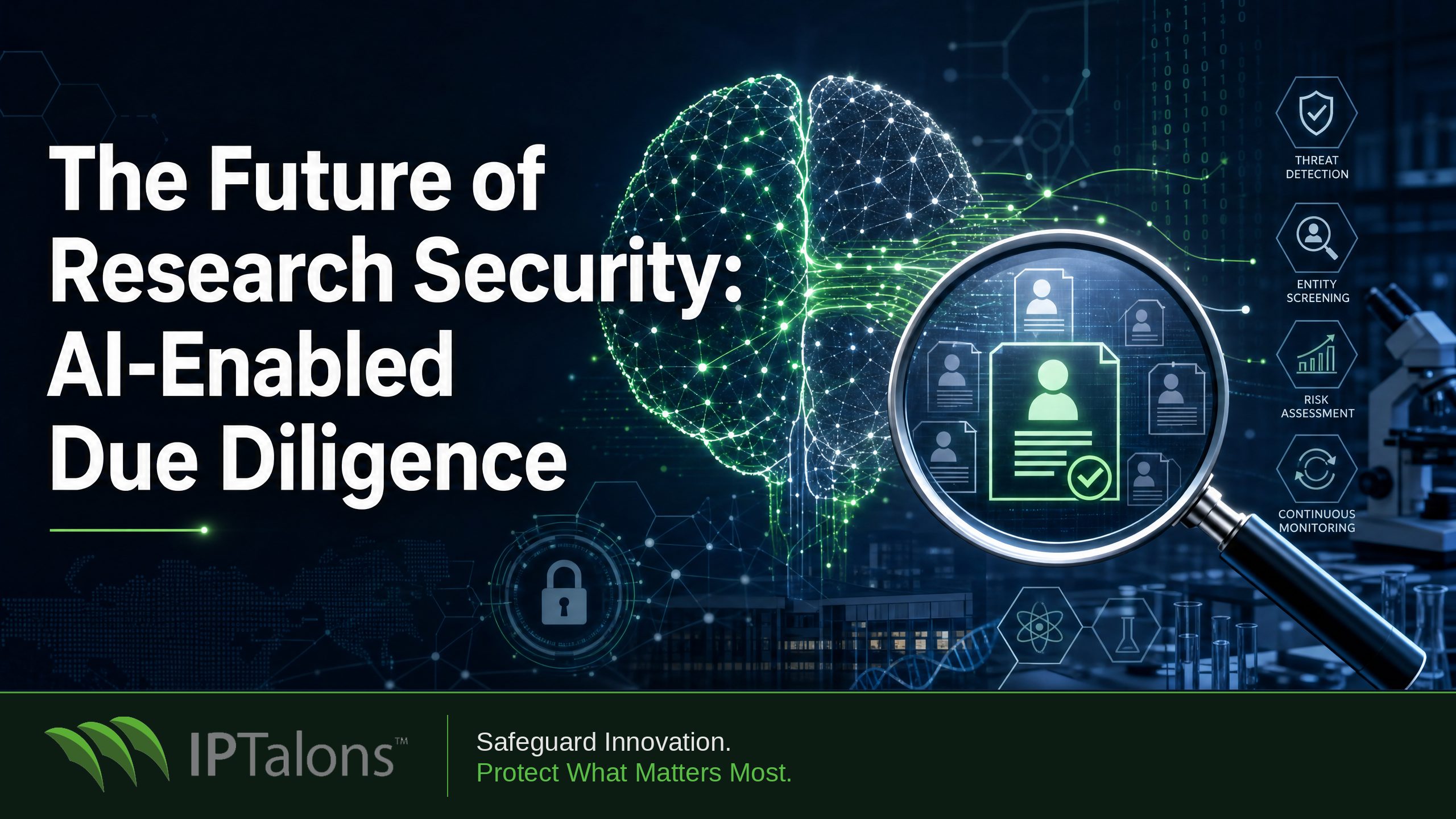
The global research landscape is more interconnected than ever before, but this openness comes with significant risks. As foreign adversaries increasingly target academic and corporate research, traditional due diligence methods are no longer sufficient.
Current vetting processes for international collaborators and grant applicants are often manual, labor-intensive, and prone to oversight. To stay ahead of sophisticated adversaries, organizations must embrace the future of research security: AI-enabled due diligence.
The Challenge: Scale and Sophistication
Without proper vetting, academic institutions, government agencies, and corporate R&D teams risk economic espionage and severe reputational damage. The sheer volume of international collaborations makes it nearly impossible for compliance teams to manually identify hidden foreign ties or undisclosed funding sources.
This challenge is compounded by the fact that adversaries are becoming increasingly sophisticated in concealing their affiliations and exploiting the open nature of academic publishing and collaboration networks.
The Solution: AI-Powered Vetting
Tools like Grant Hopper, the world's first AI-enabled due diligence platform, are designed specifically to assess research personnel for potential foreign influence risks.
Instant Analysis
By analyzing vast amounts of open-source data and cross-referencing global affiliations, AI platforms can quickly identify high-risk collaborations connected to foreign military or defense industrial bases.
Actionable Insights
This automated approach provides actionable insights, allowing organizations to make informed decisions swiftly and efficiently, without the need for large teams of analysts.
Reduced Burden
The integration of AI into research security significantly reduces the administrative burden on compliance offices while enhancing accuracy of threat detection.
The Imperative for Adoption
As regulatory mandates like NSPM-33 demand greater transparency and rigorous oversight, AI-enabled due diligence will become an indispensable tool for protecting the integrity and security of the global research enterprise.
Automatically screen collaborators for undisclosed foreign affiliations
Cross-reference global databases to identify hidden connections
Generate compliance-ready reports for federal funding agencies
Stay ahead of evolving adversary tactics with adaptive AI models
The organizations that invest in these capabilities today will be best positioned to lead tomorrow.
Embrace the Future of Research Security
Don't let manual vetting processes leave your organization vulnerable. Discover how AI-enabled due diligence can transform your research security posture.
References
[1] IPTalons: Products + Services , https://www.iptalons.com/services